Address
304 North Cardinal St.
Dorchester Center, MA 02124
Work Hours
Monday to Friday: 7AM - 7PM
Weekend: 10AM - 5PM
Address
304 North Cardinal St.
Dorchester Center, MA 02124
Work Hours
Monday to Friday: 7AM - 7PM
Weekend: 10AM - 5PM


 Byadmin
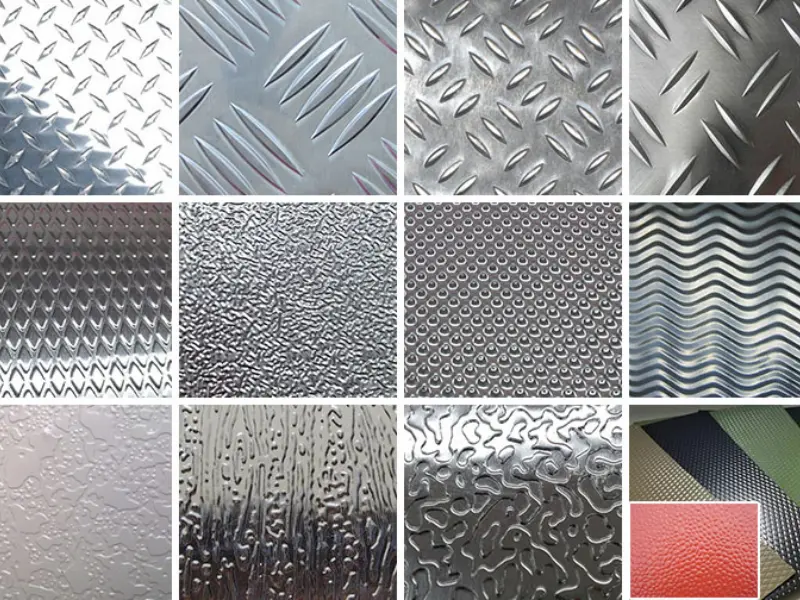
Embossed Aluminum vs Flat Aluminum Sheet When selecting aluminum materials for your project, understanding the differences between embossed aluminum sheet and flat aluminum sheet is essential. Both options offer unique advantages depending on your specific requirements. This comprehensive guide will help you make an informed decision by comparing their characteristics, specifications, applications, and performance factors.
| Feature | Embossed Aluminum Sheet | Flat Aluminum Sheet |
|---|---|---|
| Surface Texture | Raised patterns (diamond, stucco, five-bar) | Smooth, uniform finish |
| Thickness Range | 0.8mm – 10.0mm | 0.2mm – 500mm |
| Standard Width | 1000mm – 2000mm | 500mm – 2650mm |
| Standard Length | 2000mm – 6000mm | 1000mm – 12000mm |
| Weight (per m² at 2mm) | ~5.8 kg | ~5.4 kg |
| Surface Area | Increased by 10-30% | Standard surface area |
| Property | Embossed Aluminum | Flat Aluminum |
|---|---|---|
| Tensile Strength | 90-290 MPa (varies by alloy) | 70-700 MPa (varies by alloy) |
| Yield Strength | 30-240 MPa | 30-650 MPa |
| Elongation | 12-35% | 5-35% |
| Hardness (Brinell) | 25-95 HB | 20-150 HB |
| Fatigue Resistance | Moderate | High to very high |
| Performance Factor | Embossed Aluminum Sheet | Flat Aluminum Sheet |
|---|---|---|
| Slip Resistance | Excellent (high friction coefficient) | Poor (smooth surface) |
| Aesthetic Appeal | Decorative, hides scratches | Clean, modern appearance |
| Structural Strength | Enhanced rigidity | Standard rigidity |
| Corrosion Resistance | Excellent | Excellent to superior |
| Thermal Conductivity | Slightly reduced | Optimal |
| Electrical Conductivity | Slightly reduced | Optimal |
| Cleanability | Requires more effort | Easy to clean |
| Paint Adhesion | Excellent (mechanical bonding) | Good to excellent |
| Pattern Type | Description | Typical Thickness | Common Alloys | Primary Applications |
|---|---|---|---|---|
| Five-Bar Pattern | Parallel raised bars with anti-slip properties | 1.5mm – 6.0mm | 1050, 1060, 3003, 5052 | Flooring, ramps, stair treads |
| Diamond Pattern | Diamond-shaped raised texture | 1.0mm – 8.0mm | 1100, 3003, 6061 | Decorative panels, tool boxes |
| Stucco Pattern | Irregular pebbled texture | 0.8mm – 3.0mm | 1050, 1060, 3003 | Refrigeration, insulation |
| Orange Peel Pattern | Dimpled surface resembling citrus skin | 1.0mm – 4.0mm | 3003, 5052 | Automotive, aerospace interiors |
| Custom Patterns | Client-specific designs | 1.0mm – 10.0mm | Various | Branding, architectural features |
| Alloy Series | Main Alloying Elements | Strength Level | Typical Thickness Range | Key Characteristics |
|---|---|---|---|---|
| 1000 Series | Pure Al (≥99%) | Low | 0.2mm – 50mm | Excellent corrosion resistance, high thermal/electrical conductivity |
| 2000 Series | Copper (Cu) | High | 0.5mm – 150mm | High strength, aerospace applications, limited corrosion resistance |
| 3000 Series | Manganese (Mn) | Medium | 0.2mm – 100mm | Good formability, excellent corrosion resistance, moderate strength |
| 5000 Series | Magnesium (Mg) | Medium-High | 0.5mm – 200mm | Excellent corrosion resistance, good weldability, marine grade |
| 6000 Series | Magnesium + Silicon | Medium-High | 0.5mm – 300mm | Good formability, heat-treatable, structural applications |
| 7000 Series | Zinc (Zn) | Very High | 1.0mm – 200mm | Highest strength, aerospace and military applications |
| Temper | Description | Hardness | Formability | Common Uses |
|---|---|---|---|---|
| O (Annealed) | Softest condition | Very Low | Excellent | Deep drawing, complex forming |
| H12 | Quarter hard | Low | Very Good | General forming, bending |
| H14 | Half hard | Medium | Good | Moderate forming, structural |
| H16 | Three-quarter hard | Medium-High | Fair | Limited forming, rigidity required |
| H18 | Full hard | High | Poor | No forming, maximum strength |
| T4 | Solution heat-treated | Medium | Good | Heat-treatable alloys, forming |
| T6 | Solution heat-treated and aged | High | Poor | Maximum strength applications |
| Stage | Process Description | Equipment Used | Quality Control |
|---|---|---|---|
| 1. Material Selection | Choose appropriate alloy and temper | – | Chemical composition analysis |
| 2. Surface Preparation | Cleaning and degreasing | Alkaline wash tanks | Surface cleanliness inspection |
| 3. Rolling | Achieve base thickness | Cold rolling mills | Thickness measurement (±0.02mm) |
| 4. Embossing | Pattern imprinting | Embossing rollers (engraved) | Pattern depth verification |
| 5. Annealing | Stress relief (if required) | Continuous annealing furnaces | Hardness testing |
| 6. Cutting | Shearing to final dimensions | CNC shearing machines | Dimensional accuracy check |
| 7. Surface Treatment | Optional coating or finishing | Coating lines | Coating thickness measurement |
| 8. Packaging | Protective film application | Automated packaging | Visual inspection |
| Stage | Process Description | Tolerance Achievable |
|---|---|---|
| Casting | Direct chill (DC) casting or continuous casting | ±5mm thickness |
| Hot Rolling | Reduce ingot to intermediate thickness | ±0.5mm |
| Cold Rolling | Final thickness reduction | ±0.01mm to ±0.05mm |
| Heat Treatment | Annealing or solution treatment | Temperature ±5°C |
| Finishing | Tension leveling, edge trimming | Flatness ≤5 I-units |
| Surface Treatment | Mill finish, brushed, or coated | Ra 0.2-3.2 μm |
Industrial and Commercial Flooring
Transportation Sector
Building and Construction
Specialized Equipment
Aerospace Industry
Automotive Manufacturing
Electronics and Electrical
Food and Beverage
Construction and Architecture
Marine Applications
| Material Type | Thickness | Alloy | Approximate Price Range (USD/m²) |
|---|---|---|---|
| Embossed Aluminum | 1.5mm | 3003-H14 | $12 – $18 |
| Embossed Aluminum | 3.0mm | 5052-H32 | $22 – $32 |
| Embossed Aluminum | 5.0mm | 6061-T6 | $35 – $50 |
| Flat Aluminum | 1.5mm | 3003-H14 | $10 – $15 |
| Flat Aluminum | 3.0mm | 5052-H32 | $18 – $28 |
| Flat Aluminum | 5.0mm | 6061-T6 | $30 – $45 |
| Factor | Embossed Aluminum Impact | Flat Aluminum Impact |
|---|---|---|
| Raw Material Cost | Base price + 10-20% processing | Standard market price |
| Tooling Costs | Higher for custom patterns | Minimal for standard sizes |
| Installation Labor | Reduced (self-draining, anti-slip) | Standard installation time |
| Maintenance Costs | Lower (hides wear and tear) | Higher (visible scratches) |
| Replacement Frequency | Longer lifespan in high-traffic areas | May require earlier replacement |
| Total Cost of Ownership | Often lower for flooring applications | Lower for non-wear applications |
| Scenario | Reasoning |
|---|---|
| Slip resistance is critical | The raised patterns provide excellent traction, reducing accident risks in wet or oily conditions |
| Aesthetics need to hide imperfections | Textured surfaces naturally conceal scratches, dents, and wear over time |
| Structural rigidity is needed | The embossing process increases stiffness without adding weight |
| Drainage is important | Channels in patterns allow water and debris to flow away |
| Decorative appeal is desired | Available in various patterns for visual interest |
| Scenario | Reasoning |
|---|---|
| Maximum corrosion resistance is required | Smooth surfaces are easier to protect and clean |
| Precise dimensional tolerances are needed | Flat sheets offer tighter thickness control |
| Surface finishing is planned | Easier to anodize, paint, or coat uniformly |
| Forming operations are extensive | Smooth surfaces allow for deep drawing and complex bending |
| Electrical or thermal conductivity is critical | No surface disruptions to current or heat flow |
| Cost is a primary concern | Generally 10-20% less expensive than embossed alternatives |
| Parameter | Embossed Aluminum | Flat Aluminum |
|---|---|---|
| Density | 2.7 g/cm³ | 2.7 g/cm³ |
| Melting Point | 660°C | 660°C |
| Thermal Expansion | 23.6 × 10⁻⁶/K | 23.6 × 10⁻⁶/K |
| Thermal Conductivity | 120-220 W/(m·K) | 130-250 W/(m·K) |
| Electrical Resistivity | 2.7-4.9 × 10⁻⁸ Ω·m | 2.5-4.5 × 10⁻⁸ Ω·m |
| Elastic Modulus | 69 GPa | 69 GPa |
| Poisson’s Ratio | 0.33 | 0.33 |
| Pattern Height | 0.3mm – 2.0mm | N/A |
| Surface Roughness (Ra) | 5-50 μm | 0.2-3.2 μm |
Both embossed and flat aluminum sheets offer excellent environmental benefits:
Embossed aluminum may have a slight advantage in sustainability for flooring applications due to longer replacement intervals, while flat aluminum is preferable when maximum recyclability value is needed due to cleaner surfaces.
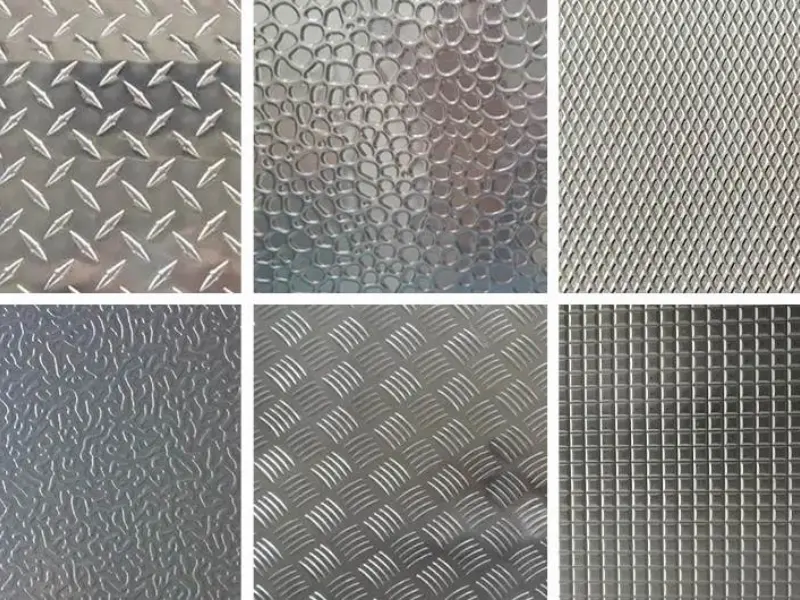
Embossed aluminum sheet refers to aluminum plates that have been processed through mechanical pressing to create raised patterns on the surface. These patterns can include diamond plates, stucco designs, five-bar patterns, and custom textures. The embossing process enhances both the aesthetic appeal and functional properties of the aluminum material.
Manufacturers produce embossed aluminum sheets by passing flat aluminum through specialized rollers that imprint specific designs. This process increases the surface area while maintaining the core benefits of aluminum—lightweight properties, corrosion resistance, and excellent workability.
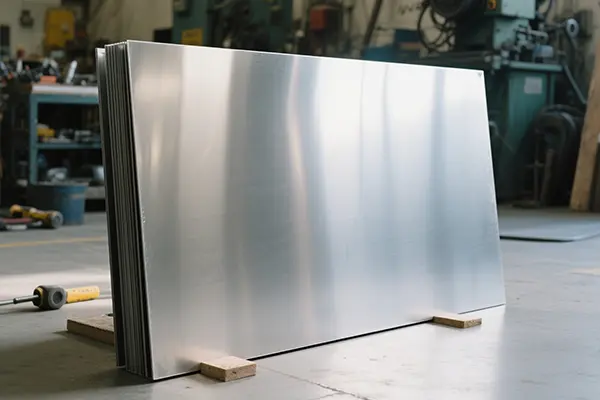
Flat aluminum sheet represents the standard form of aluminum material with smooth, untextured surfaces. Available in various alloys and tempers, flat aluminum sheets serve as the foundation for countless industrial and commercial applications. These sheets undergo rolling processes to achieve precise thickness tolerances and surface finishes.
Flat aluminum sheets come in different grades, from pure aluminum (1000 series) to high-strength alloys (7000 series), making them suitable for diverse engineering requirements.
The choice between embossed aluminum sheet and flat aluminum sheet ultimately depends on your specific application requirements. Embossed aluminum excels in situations requiring slip resistance, durability, and aesthetic concealment of wear. Flat aluminum is the superior choice for applications demanding precise tolerances, maximum formability, and optimal surface finishing capabilities.
Consider these key factors when making your decision:
By carefully evaluating these aspects against the detailed specifications and comparison tables provided in this guide, you can select the optimal aluminum sheet type for your project, ensuring both performance and value.
For specialized applications, consult with aluminum suppliers who can provide material certifications, testing data, and application-specific recommendations to ensure your selection meets all regulatory and performance standards.
This comprehensive comparison of embossed aluminum vs flat aluminum sheet provides the technical information needed to make informed material selections for industrial, commercial, and architectural applications.