Address
304 North Cardinal St.
Dorchester Center, MA 02124
Work Hours
Monday to Friday: 7AM - 7PM
Weekend: 10AM - 5PM
Address
304 North Cardinal St.
Dorchester Center, MA 02124
Work Hours
Monday to Friday: 7AM - 7PM
Weekend: 10AM - 5PM



 Byadmin
Aluminum is a versatile metal used in almost every industry. However, you often see aluminum that is not smooth. If you have ever looked inside a refrigerator or at a truck floor, you have likely seen it. But what is embossed aluminum used for, and why is it preferred over flat sheets?
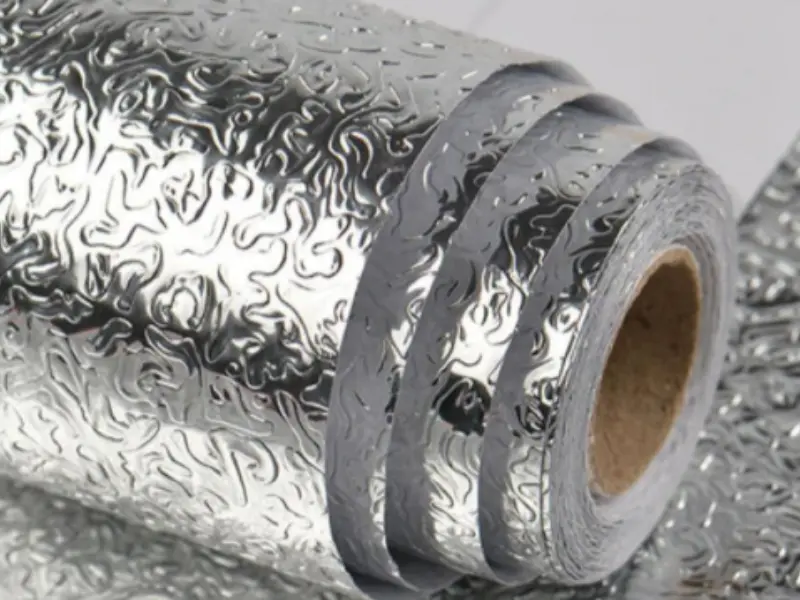


Embossed aluminum is a flat aluminum sheet through embossing rollers. These rollers apply high pressure to create a specific pattern on the surface. This process does not just change the look; it also makes the metal stiffer and more durable.
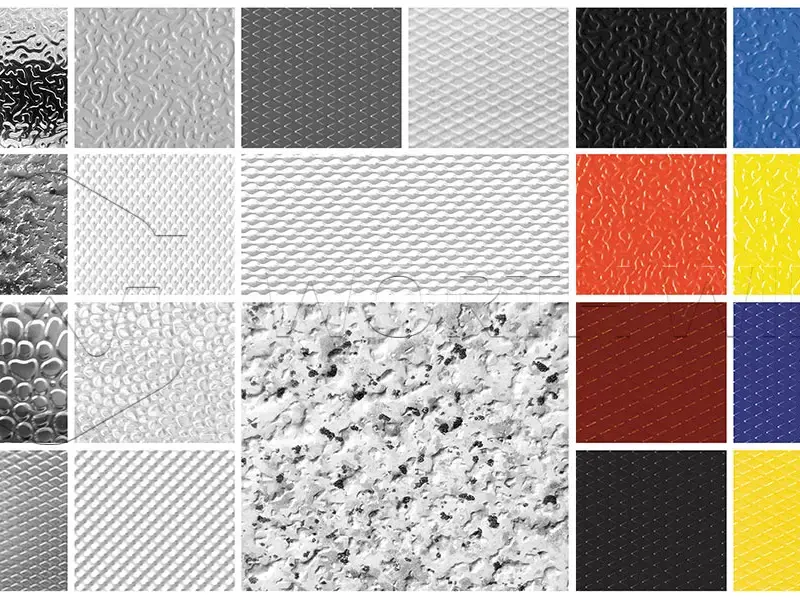
The most common pattern is “stucco,” which looks like orange peel. Other patterns include diamond, hammer, and classic grain.
To understand what is embossed aluminum used for, we must look at its chemical makeup. Not all embossed sheets are made from the same alloy.
The “Temper” describes the hardness of the metal.
| Specification Item | Typical Value (Digital) |
|---|---|
| Thickness | 0.2 mm to 3.0 mm |
| Width | 600 mm to 1500 mm |
| Length | 1000 mm to 4000 mm (or coils) |
| Coating Type | PE, PVDF, or Bare (Mill Finish) |
Different patterns serve different industries. Here are the most common types:
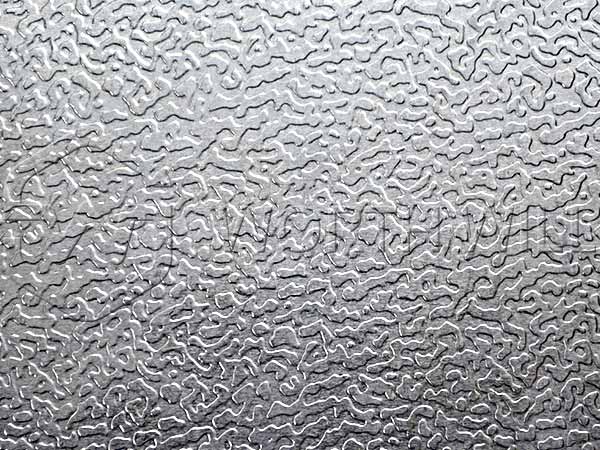
This is the most common variety. It features a bumpy texture that resembles the skin of an orange. It is used heavily in the appliance and HVAC industries.
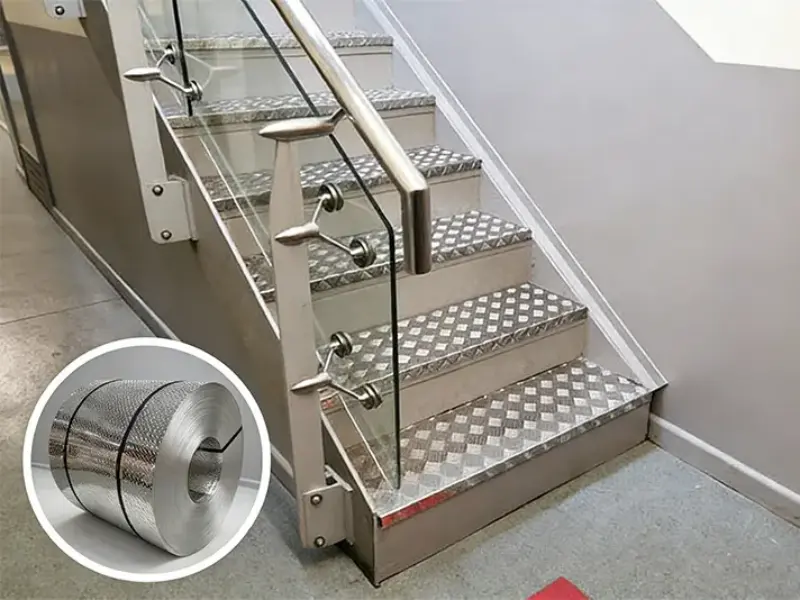
This pattern has raised “diamonds” or lines. It is primarily used for safety and grip. You will see this on stairs, ramps, and the floors of emergency vehicles.
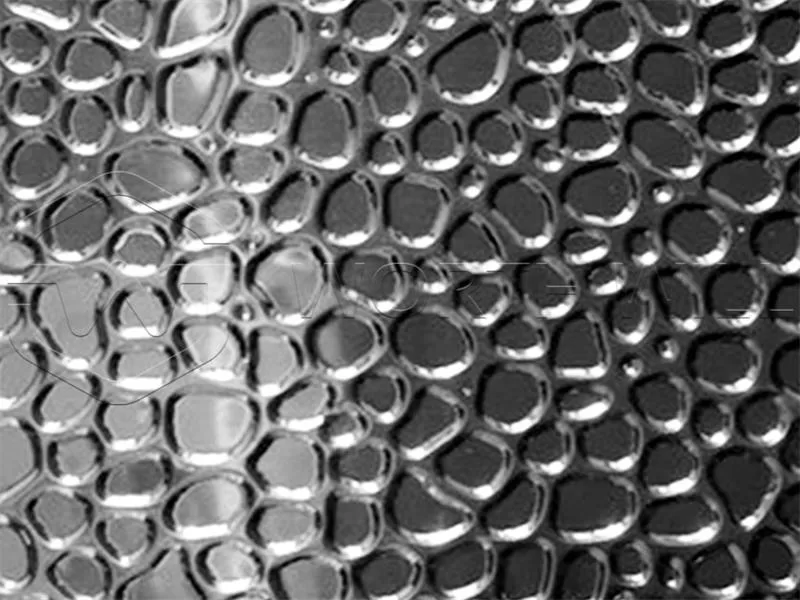
This looks like the metal has been hit many times with a small hammer. It is very decorative and is often used in high-end interior design or lighting reflectors.
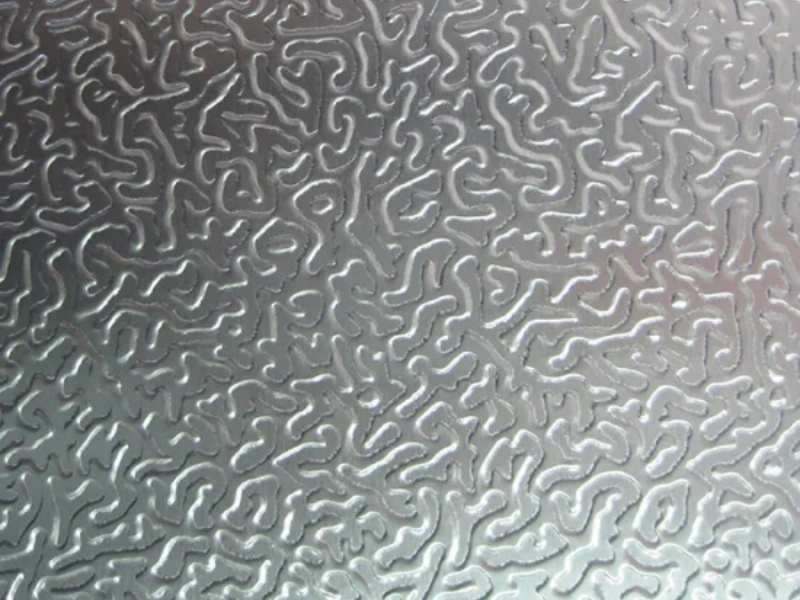
These patterns are often used for decorative wall panels and siding. They provide a clean, modern look while hiding surface imperfections.
Now, let’s look at the specific areas where this material is essential.
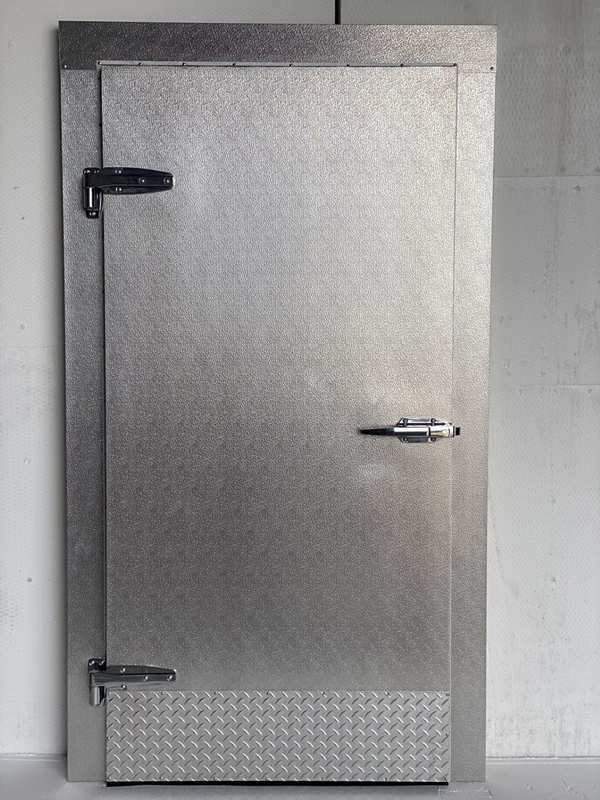
If you open a chest freezer, the inner lining is almost always stucco embossed aluminum.

Embossed aluminum is a favorite for exterior surfaces.

Heating and cooling systems require durable materials to protect insulation.
The transport industry needs materials that are light but tough.
Choosing between these two depends on your project goals.
| Feature | Embossed Aluminum | Flat Aluminum |
|---|---|---|
| Visuals | Textured, hides defects | Smooth, shows every scratch |
| Stiffness | Higher (due to pattern) | Lower |
| Glare | Low (diffuses light) | High (reflective) |
| Grip | Excellent (in some patterns) | Very slippery when wet |
| Cleaning | Harder (dirt gets in grooves) | Very easy to wipe clean |
| Cost | Slightly higher | Standard |
In the world of cold storage, stucco embossed aluminum is king. These sheets are often coated with a special anti-corrosion layer. Because they are often in contact with moisture, the 3003 alloy is preferred to prevent rust.
Industrial floors need to be safe. Diamond plate (often called tread plate) is usually made from the 5052 alloy. This alloy is strong enough to handle the weight of forklifts and workers. The “diamonds” are usually 1.0 mm to 2.0 mm high to ensure maximum grip.
For using pipe insulation, thin foils These are typically from the 1060 series. They are easy to bend by hand. The embossing helps the foil grip the insulation material, preventing it from sliding around during installation.
When buying this material, ask yourself these three questions:
If it is for the ocean or a salty environment, go with the 5000 series. For indoor appliances, the 3000 series is perfect.
Thin sheets (0.3 mm) are great for liners. Thicker sheets (2.0 mm or more) are required for flooring and structural use.
If you want a modern, clean look, choose the stucco pattern. If you want a bold, industrial look, choose the diamond pattern.
So, what is embossed aluminum used for? It has uses to make products stronger, safer, and more beautiful. From the inside of your freezer to the roof of a stadium, embossed aluminum provides a solution that flat metal cannot. Its ability to hide wear and tear while providing structural benefits makes it one of the most cost-effective materials in modern manufacturing.
Whether you are in the HVAC business, appliance manufacturing, or construction, choosing the right alloy and pattern of embossed aluminum will ensure your project lasts for years. Explore the different stucco embossed aluminum and diamond plate options to find the perfect fit for your needs.