Address
304 North Cardinal St.
Dorchester Center, MA 02124
Work Hours
Monday to Friday: 7AM - 7PM
Weekend: 10AM - 5PM
Address
304 North Cardinal St.
Dorchester Center, MA 02124
Work Hours
Monday to Friday: 7AM - 7PM
Weekend: 10AM - 5PM



 Byadmin
A useful request for quotation for stucco embossed aluminum coil specifies the application, alloy and temper, base metal thickness, finished width, surface requirements and coil dimensions. It also tells the supplier how much material you need and where it will be delivered. Providing these details at the start helps suppliers quote against the same requirements and helps your team identify a material that fits the production line.
On this page — Application · RFQ checklist · Material and gauge · Surface finish · Coil dimensions · Packing · RFQ template · Approval checks
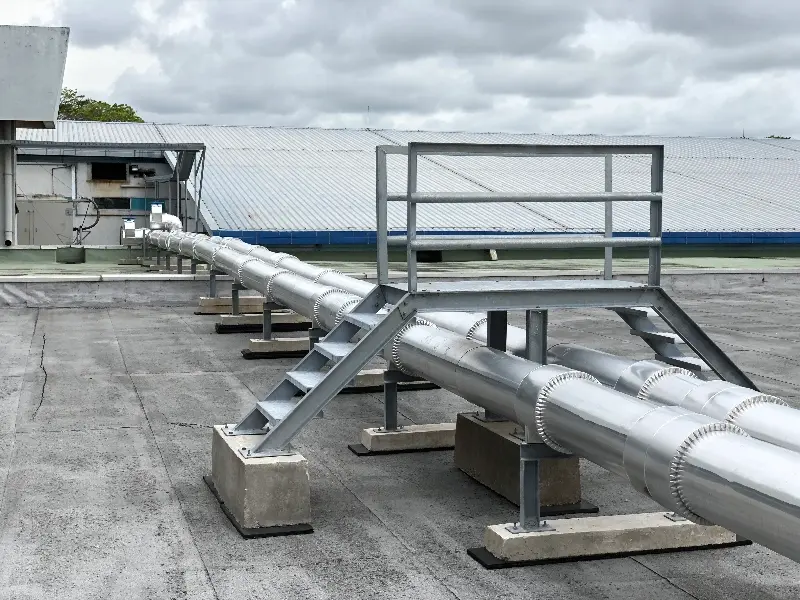
Tell the supplier what you will make and how you will process the coil. An insulation contractor may slit the material and form it into pipe jacketing. An appliance fabricator may feed it through a decoiler, level it, cut blanks and bend them into liner panels. A similar surface texture can appear in both applications, while each fabricator needs its own backing, edge condition and coil size.
Attach a drawing or a marked-up sample. Identify the visible side, critical bends and any contact with adhesives, protective films or cleaning agents. For outdoor service, describe the exposure and provide the project specification. For repeat purchases, include the previous purchase order number or approved sample reference so the supplier can identify the agreed pattern and packing.
| Specification | What to send |
|---|---|
| Application | Finished part, forming process and service environment |
| Material | Alloy, temper and governing material specification |
| Thickness and width | Base metal gauge, finished slit width and tolerances |
| Surface | Pattern reference, visible face, finish and backing |
| Coil limits | Inside diameter, maximum outside diameter and maximum net coil weight |
| Order and delivery | Quantity, allowable variation, packaging and named delivery point |
Use the alloy and temper on the approved drawing. If the design is still open, share the fabrication steps and ask the supplier to state the proposed material on the quote. Ask for a separate quote line for any substitute so your team can compare it against the original specification. A trial on your own equipment can show whether the proposed material works for the bends, tooling and appearance of the finished part.
Identify what the thickness number describes. Base metal thickness refers to the substrate gauge. Overall thickness can reflect the embossed relief and any coating or backing. When both dimensions affect fit, state both requirements and agree on the measurement method and tolerance. A dimension written only as “0.50 mm embossed” can leave the buyer and seller working from different assumptions.
Compare quotes using the same thickness definition and tolerance. Ask suppliers to state the measurement method in writing.
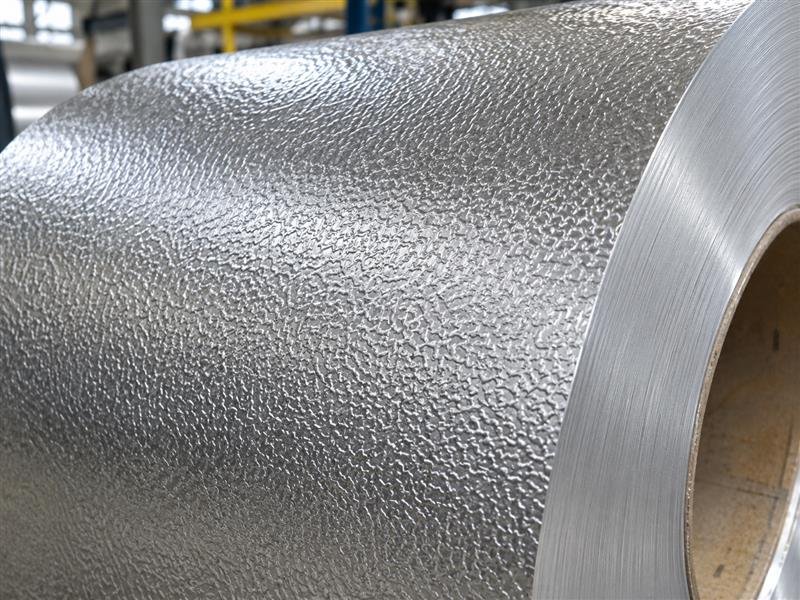
Stucco embossing creates an irregular texture often described as orange peel. If a visible panel must match an existing part, send a sample or a close-up photo with a scale. Use angled lighting to show the relief. Review the supplier’s physical sample under lighting similar to the installation and record which side will face out. For adjacent panels, compare the samples side by side to check how the surfaces look together.
Describe the finish on each side, including any coating, removable film or laminated moisture barrier backing. Identify the side that receives each treatment. If the coil will be bonded after forming, request a sample with the specified reverse-side finish for an adhesion trial. If you need protective film, describe how long it stays in place and whether it will pass through forming equipment before removal.

State the finished slit width and tolerance. Ask the line operator about burr, coil set and other edge or shape requirements that can affect feeding. Include any trim allowance in the ordered width and show the finished part width separately on the drawing. This gives the supplier enough information to quote the width you actually need to receive.
Provide the inside diameter that fits the mandrel, the maximum outside diameter and the maximum net weight per coil. Check lifting capacity at the receiving dock as well as the capacity of the decoiler. Specify whether the coil eye must arrive horizontal or vertical. If a quotation meets the total order weight but exceeds your per-coil limit, ask for a revised coil split before ordering.

Give the firm quantity and allowable variation. Ask the supplier to list the expected coil count and net weight range per coil. Provide any forecast for repeat purchases separately from the current order. For a weight-based quote, state the unit and currency and ask how the invoice weight will be determined. Agree on how samples and any trial quantity will be priced.
Request a delivery term with its named place and ask which freight and handling costs are included. Confirm the lead time and when it starts. List required wrapping, edge protection and handling orientation. Useful label fields include the purchase order number, alloy and temper, size, net and gross weights and coil identification. Specify any inspection documents or material records your receiving team needs to match the shipment to the order.

Product and end use — Stucco embossed aluminum coil for [finished part and fabrication process].
Material and dimensions — [Alloy and temper], [base metal thickness and tolerance], [finished slit width and tolerance].
Surface and winding — [Pattern reference], [visible side], [front finish and reverse-side backing], [winding direction].
Coil and shipment — [Inside diameter], [maximum outside diameter], [maximum coil weight], [quantity], [packing], [delivery point and target date].
Please confirm — Price basis, coil count, lead time, sample availability, documentation and any deviations.
Suppose a fabricator requests three tonnes of stucco embossed aluminum coil for an appliance liner. The quantity gives the supplier a starting point. The fabricator can then send a drawing showing the visible face, add the approved material designation and include a photo and sample reference for the texture. The line operator can supply the mandrel diameter and maximum loaded coil weight.
If the supplier offers two widths, ask how each would affect trim loss and the number of usable blanks. Calculate the cost per accepted blank using consistent assumptions for cutting yield, unusable lead or tail material and delivery. Before releasing the full order, run a representative sample through the operations that matter most. Check surface marking during feeding, folded-edge fit and appearance beside adjacent panels. Record the results with your sample approval.
Can I request pricing before the alloy is decided? Yes. Label it as a budget inquiry and share the application, forming process and mandatory properties. Ask the supplier to identify the alloy, temper and finish assumed for the estimate. Request a firm quote once your team approves the material.
Should I buy coil or cut-to-length sheets? Compare your equipment, order quantity, cutting yield and storage space. Coil suits a line with suitable unwinding equipment. Sheets may suit a smaller run or a shop that processes individual blanks. Give separate dimensions if you request both prices.
Which dimensions belong on the purchase order? Record the base metal gauge, finished slit width, tolerances and required inside diameter. Add the maximum outside diameter and net weight where they affect handling, along with the approved drawing and pattern reference.
Review the quote with purchasing, quality and the production operator. Purchasing can check the price basis and shipment scope. Quality can check tolerances, samples and traceability. The operator can confirm that the material will feed through the line. Record the agreed requirements on the purchase order so the receiving team can inspect the delivery against the same specification.
For a first order or a surface match, agree on sample acceptance criteria before approving production. Keep one approved sample at receiving and give the supplier the same reference. If the trial changes the alloy, thickness, film or winding direction, update the written specification before issuing the order.
Explore embossed aluminum patterns and applications, or send Worthwill your drawing and RFQ through the contact page to discuss the requirements for your next order.