Address
304 North Cardinal St.
Dorchester Center, MA 02124
Work Hours
Monday to Friday: 7AM - 7PM
Weekend: 10AM - 5PM
Address
304 North Cardinal St.
Dorchester Center, MA 02124
Work Hours
Monday to Friday: 7AM - 7PM
Weekend: 10AM - 5PM


 Byadmin
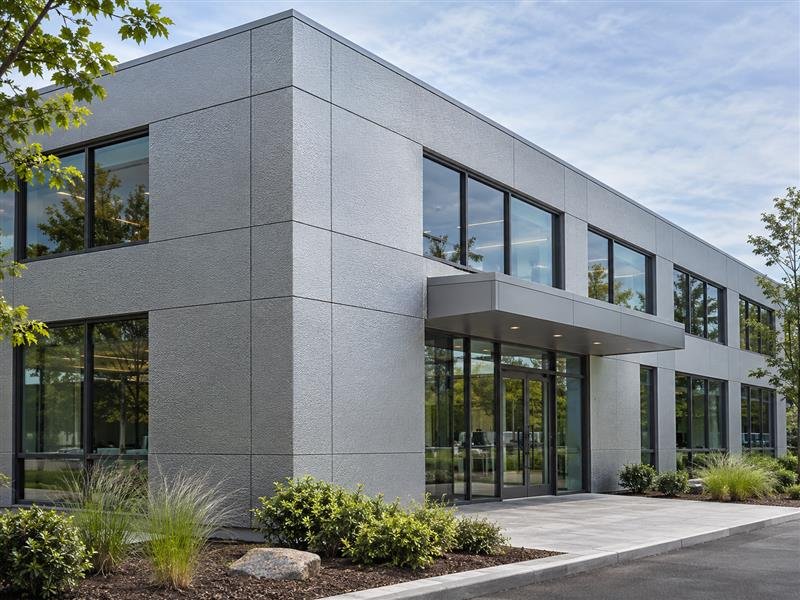
Embossed aluminum is popular in modern buildings because it combines a textured metallic appearance with the fabrication flexibility of sheet and coil. Architects can use it to introduce visual depth across facade panels, interior surfaces and selected roof or service enclosures.
For purchasing teams, the decision also involves panel geometry, surface consistency, coating choice and installation details. A successful specification connects the appearance approved by the architect with a product the fabricator can form and the installer can handle.
On this page — Appearance · Applications · Selection table · Panel details · Mock-up review · Buying checklist
A fine stucco pattern breaks a large metal surface into many small highlights. As daylight moves across a facade, the texture creates a changing visual effect while retaining a consistent material palette. This gives designers another way to work with metal alongside color, panel proportions and joint spacing. The perceived result depends on the embossing pattern, finish, viewing distance and lighting. A sample that looks pronounced on a desk may read as a subtle surface from across a courtyard.
Texture can also make small handling marks less visually prominent. That can be helpful on surfaces that pass through forming, packing and installation before handover. The project team should still define acceptable scratches, dents and protective-film marks. View samples both close up and at the expected viewing distance. Where new panels meet an existing elevation, agree on a reference sample and assess the match under several light conditions.
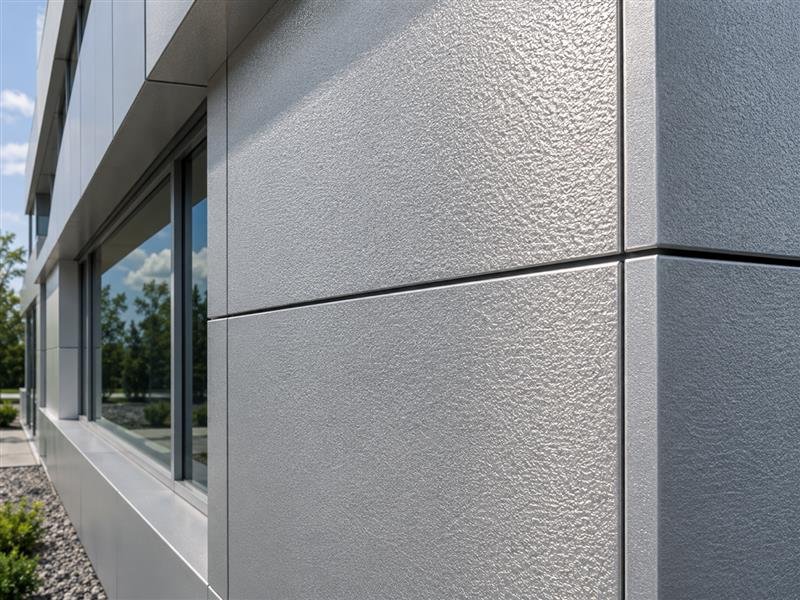
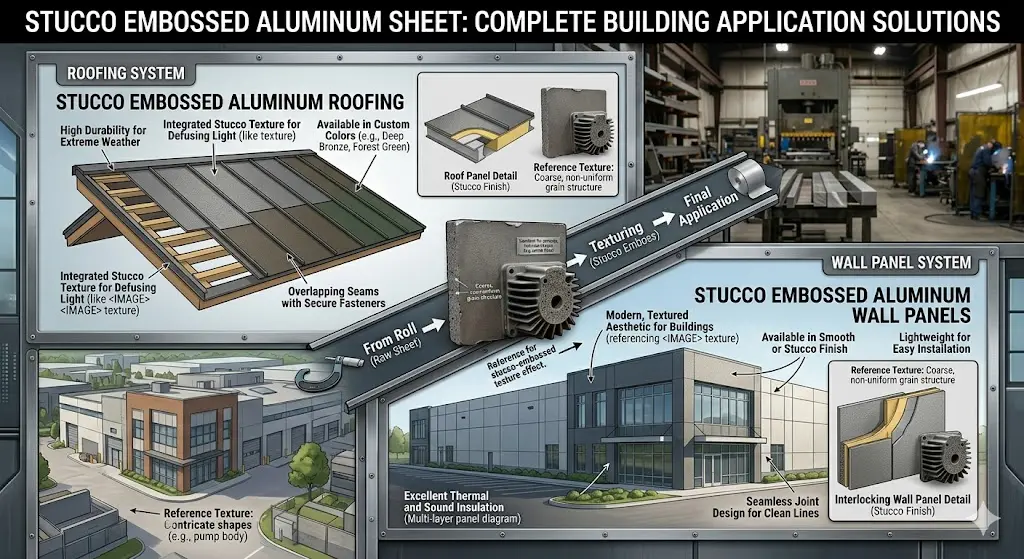
Potential uses include decorative cladding, wall liners, ceiling elements and protective enclosures for building services. Each application places different demands on the sheet. An interior wall panel may prioritize appearance and cleaning access. An exterior panel needs a complete assembly design covering drainage, wind loading, fixings and movement. A mechanical-services enclosure may need removable panels that fit around supports and allow routine inspection.
Start with the role of the component and review the applicable project documents. For a facade, establish whether the proposed product is a solid sheet panel, a formed cassette or part of a composite assembly. Record the substrate and any insulation or backing separately. Suppliers of architectural aluminum offer multiple finishes and building-envelope products, as illustrated by the Novelis building envelope range. The project specification should identify the exact material and system being evaluated.
| Application | Details to define | Sample or document to review |
|---|---|---|
| Exterior wall panels | Panel size, alloy and temper, gauge, finish, joint layout and fixing arrangement | Assembly drawings, finish sample and project performance requirements |
| Interior feature panels | Visible face, color, edge details and cleaning access | Full-size corner or junction mock-up |
| Ceilings and soffits | Support spacing, panel flatness and access requirements | Shop drawing and representative panel |
| Service enclosures | Handling, access openings, fasteners and surrounding materials | Prototype enclosure and maintenance access plan |
Approve the complete panel concept. Review texture, finish, joints and edges together so the purchased sheet supports the intended architectural result.
Embossing describes the surface relief. The material specification also needs an alloy, temper and base metal thickness. These details influence how the fabricator bends, folds and supports the panel. Use the values approved by the designer or ask the fabricator to propose a combination for a documented trial. Record any alternatives as separate options so a quotation can be traced to the material being offered.
State whether thickness refers to the base metal or a measurement over the raised texture. If overall thickness affects a joint or clip, record that requirement separately. Define tolerances for the delivered sheet or coil and identify the visible face. Where paint, anodizing or another finish is required, specify its appearance and performance requirements with the responsible finish supplier. Confirm the processing sequence and approve the resulting embossed sample.

Sheet selection and panel design need to progress together. A folded cassette introduces bend radii, corners and return flanges that a flat material sample does not show. Ask the fabricator to prepare a representative corner and confirm how the visible texture behaves around the fold. Check the junction with adjacent glazing, trims or other cladding. Record the panel orientation if it affects how the surface reads across an elevation.
Exterior aluminum panels need attachment and joint details that accommodate the movement expected in the design. The responsible facade designer should establish the fastener arrangement, support conditions and movement provisions. Keep water-shedding and drainage details visible in shop drawings. Review contact with other materials and the specified isolation details. These decisions help the installer reproduce the approved assembly consistently across the building.

Build the mock-up large enough to include the joints and corners that matter. Place it where the review team can see it in light and shadow. Inspect it from the street or the normal interior viewing position, then examine the edges at close range. Include a panel with the proposed protective film removed and check the cleaning method on a retained sample. Record the lighting and distance used for acceptance.
A mock-up can also reveal handling issues. Ask the fabricator how panels will be separated in the stack, supported in transit and identified for installation. Agree on where labels may be placed and how film will be removed. Keep one approved sample with the fabricator and another with the site team. When a later batch differs in texture or finish, both teams can compare it against the same reference.
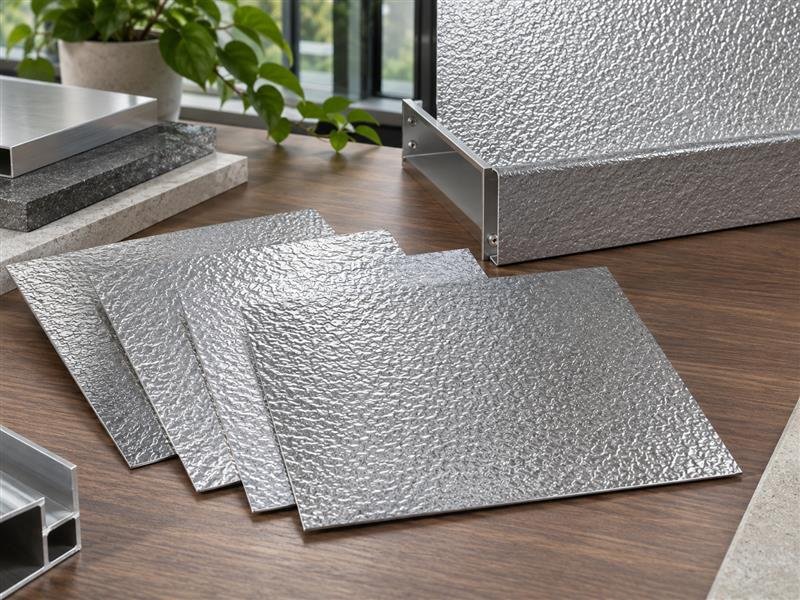
Select a cleaning method compatible with the actual finish and trial it on the approved sample. Document the cleaning products, tools and access arrangements that the building owner will use. Review areas where dirt or water may collect around folds and trims. If several finishes are used on the same elevation, check the instructions for each one and coordinate the cleaning sequence.
For projects with repeated panel sizes, ask whether the order should include replacement pieces or retained material from the same finish batch. Store spares with clear labels identifying the elevation, finish and approved pattern. Record the original purchase specification and supplier reference in the handover information. That gives the maintenance team a practical starting point if a panel is damaged years later.
When the architect approves the appearance, translate that decision into the purchasing documents. Include the sample reference, finish designation, pattern, visible face and panel direction where relevant. Identify the party responsible for cutting, forming and finishing. If sheet is purchased by one company and formed by another, confirm that both work from the same drawing revision and approved material specification. List the sample approval as a dated record that purchasing can reference on the order.
For example, a project with wall panels and matching soffits may need two formed geometries made from one approved surface. Review both details during the trial. A sample accepted for the wall can behave differently at the tighter return on a soffit. Ask the fabricator to report the results and record any change to gauge, temper or bend radius. Review the change with the designer before releasing the repeat panels. At delivery, check the lot labels, dimensions, finish and protection against the purchase order. Set aside a representative piece from the shipment for the site team to compare with the mock-up. This keeps material approval, fabrication approval and incoming inspection connected throughout the job.
Send with the inquiry — Application and drawings, alloy and temper, base gauge and tolerance, sheet size or coil width, pattern reference, visible side, finish, quantity and delivery point.
Ask the fabricator to confirm — Forming trial, panel flatness requirements, edge details, protective film, packing and sample approval.
Before ordering — Align the sheet specification with the approved assembly drawings and retain the mock-up record.
Explore Worthwill’s embossed aluminum product range and embossed aluminum coil options, then send the drawing and finish requirements through the contact page. A clear project description helps the team discuss suitable supply formats and prepare a quotation against your requirements.