Address
304 North Cardinal St.
Dorchester Center, MA 02124
Work Hours
Monday to Friday: 7AM - 7PM
Weekend: 10AM - 5PM
Address
304 North Cardinal St.
Dorchester Center, MA 02124
Work Hours
Monday to Friday: 7AM - 7PM
Weekend: 10AM - 5PM


 Byadmin
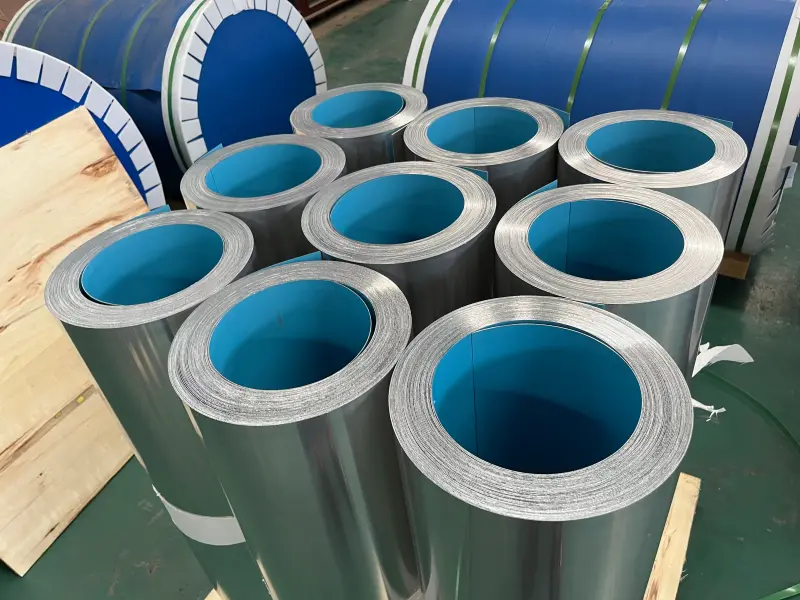
Stucco Embossed Aluminum for Pipe Insulation In industrial and commercial construction, protecting pipe insulation from mechanical damage, moisture, and environmental exposure is as important as the insulation itself.
Different aluminum alloys can be used depending on project requirements. The following alloys are commonly used in stucco embossed aluminum jacketing.
| Alloy | Characteristics | Typical Application |
|---|---|---|
| 1050 | High purity aluminum | Light insulation systems |
| 1060 | Excellent corrosion resistance | HVAC pipe insulation |
| 3003 | Stronger and durable | Industrial insulation |
| 3105 | Good weather resistance | Outdoor pipe systems |
Among these options, 3003 stucco embossed aluminum is one of the most widely used materials for pipe insulation.
Stucco embossed aluminum for pipe insulation is available in different thicknesses and sizes to fit various industrial needs.
| Thickness | Common Size | Application |
|---|---|---|
| 0.3 mm | 1000 × 2000 mm | HVAC pipes |
| 0.5 mm | 1000 × 2000 mm | Building insulation |
| 0.6 mm | 1000 × 3000 mm | Industrial pipelines |
| 0.8 mm | 1200 × 3000 mm | Outdoor insulation |
| 1.0 mm | Custom size | Heavy duty protection |
Coils are also available for continuous insulation systems.
Using stucco embossed aluminum for pipe insulation offers many practical advantages.
Aluminum naturally forms a protective oxide layer, which helps prevent rust and corrosion.
Compared with steel jacketing, stucco embossed aluminum sheet is much lighter, making installation faster and easier.
The embossed stucco pattern increases rigidity and helps resist dents or scratches.
Properly installed stucco embossed aluminum jacketing can last for decades even in outdoor environments.
The textured surface hides fingerprints and minor damage, giving insulation systems a clean and professional look.
There are several product forms used in insulation projects.
| Product Type | Description |
|---|---|
| Stucco Embossed Aluminum Sheet | Standard sheet for insulation cladding |
| Stucco Embossed Aluminum Coil | Continuous installation for large pipelines |
| Stucco Embossed Aluminum Jacketing | Pre-formed insulation covering |
| Embossed Aluminum Heat Shield Sheet | Thermal protection layer |
Each type of stucco embossed aluminum can be customized according to insulation thickness and pipe diameter.
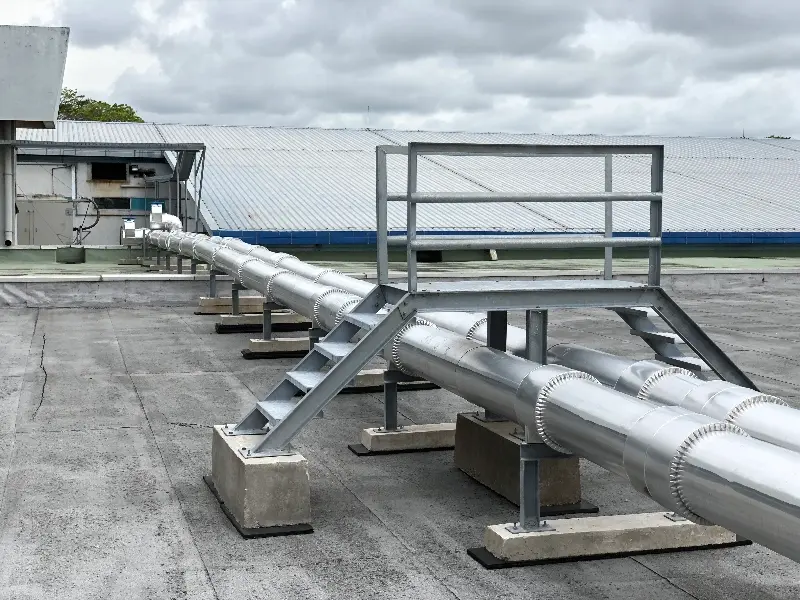
Because of its durability and corrosion resistance, stucco embossed aluminum for pipe insulation is widely used in many industries.
These applications require materials that can resist moisture, temperature changes, and outdoor weather.
Installing stucco embossed aluminum jacketing is relatively simple when proper tools are used.
Proper installation ensures that stucco embossed aluminum for pipe insulation provides long-term protection.
When selecting stucco embossed aluminum for pipe insulation, several factors should be considered.
| Factor | Recommendation |
|---|---|
| Thickness | 0.5 mm – 0.8 mm for most insulation |
| Alloy | 3003 or 1060 for corrosion resistance |
| Surface Finish | Stucco embossed pattern |
| Size | Custom sheet or coil |
| Environment | Indoor or outdoor use |
Choosing the correct specification helps improve insulation durability and performance.
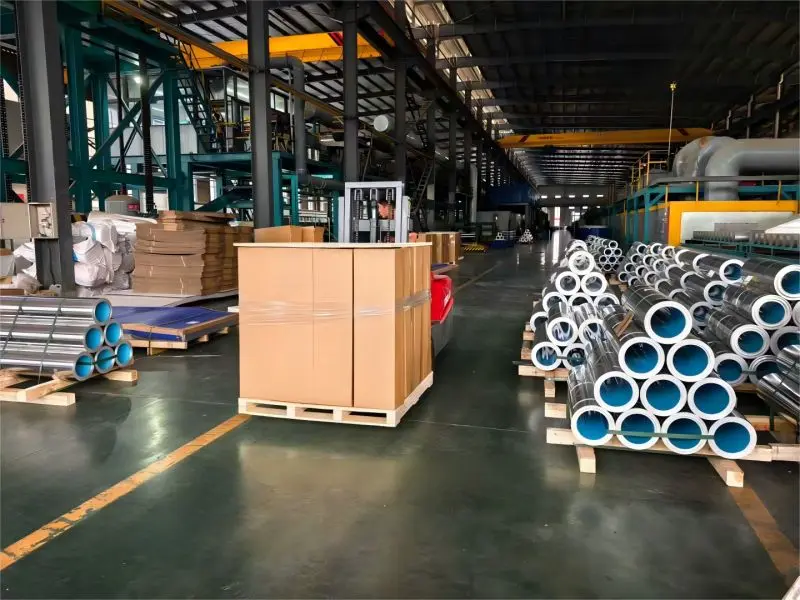
Working with a professional supplier ensures stable quality and consistent material performance.
A reliable manufacturer can provide:
Many international buyers source stucco embossed aluminum for pipe insulation from China because of strong manufacturing capacity and cost advantages.
The embossed texture serves several practical engineering purposes beyond aesthetics.
Structural rigidity is the most significant benefit. A flat sheet of thin aluminum flexes and dents easily under light contact. The stucco pattern introduces a corrugated micro-geometry that dramatically increases the sheet’s moment of inertia without adding material weight. The result is a jacketing sheet that resists denting, oil-canning, and deformation during installation and throughout its service life.
Surface area enhancement slightly increases the rate of thermal radiation and convective heat transfer from the outer jacket surface. While this effect is modest, it helps dissipate any surface warmth in hot-pipe applications and reduces the risk of condensation buildup in cold-pipe systems.
Aesthetics and light diffusion give the finished installation a clean, uniform appearance that scatters light rather than creating the mirror-like glare of bright flat aluminum. This is a practical consideration in facilities where workers must look at piping systems at close range for extended periods.
Aluminum has been the dominant pipe jacketing material for decades, and the reasons are straightforward.
Its corrosion resistance stems from the stable, self-repairing aluminum oxide layer that forms instantly on any exposed surface. Unlike steel, aluminum does not rust when exposed to moisture, atmospheric humidity, or most chemical environments.
The low density of aluminum — approximately one-third that of steel — translates directly into easier handling, faster installation, and reduced load on pipe hangers and structural supports. A worker can carry and cut aluminum jacketing with basic hand tools and tin snips without the fatigue associated with heavier metals.
Thermal reflectivity is another advantage. Bright aluminum surfaces reflect radiant heat energy, which helps reduce heat gain on cryogenic or chilled piping and minimizes heat loss from hot piping systems, complementing the performance of the underlying insulation.
Finally, aluminum is fully recyclable, which aligns with sustainability goals in modern construction and industrial projects.
HVAC and mechanical systems represent the broadest application.
Industrial process piping in chemical plants, refineries, food processing facilities, and power generation stations relies heavily on aluminum jacketing. These environments subject piping to foot traffic, equipment vibration, hose-down cleaning, and exposure to oils and solvents — all conditions that aluminum jacketing handles effectively.
Cold-storage and cryogenic installations benefit from aluminum’s performance at low temperatures, where many materials become brittle. Ammonia refrigeration systems and liquid nitrogen piping are typical examples.
Outdoor and underground exposed piping — including roof-mounted HVAC equipment, exterior mechanical risers, and tank farm piping — uses stucco embossed aluminum as a weatherproof barrier capable of shedding rain and resisting UV exposure for decades.
Proper installation is critical to the long-term performance of aluminum jacketing systems.
Moisture barriers are often installed beneath the aluminum jacket, particularly on cold piping. Self-sealing vapor retarder films or foil-faced kraft paper prevent condensation from migrating into the insulation and degrading its thermal performance over time.
Overlap and fastening follow standardized practices.
Dissimilar metal contact must be avoided. Direct contact between aluminum jacketing and carbon steel supports can create galvanic corrosion cells in wet environments. Isolation tape, plastic inserts, or non-metallic pipe supports eliminate this risk.
Field forming of the jacketing to fit elbows, tees, valve bodies, and other irregular fittings is achieved with pre-fabricated fitting covers or field-cut pieces. The ductility of standard alloy and temper combinations allows the material to conform to curved surfaces without cracking.
Stucco embossed aluminum jacketing for pipe insulation is governed by several industry standards. ASTM B209 covers the aluminum sheet and strip products used as base material.
Stucco embossed aluminum has proven itself over generations of industrial and commercial use as the jacketing material of choice for pipe insulation systems. Whether protecting a chilled water main in a hospital, a steam line in a refinery, or a refrigerant circuit in a cold storage warehouse, stucco embossed aluminum jacketing reliably extends the service life of the insulation beneath it and contributes to the overall efficiency and appearance of the installation.