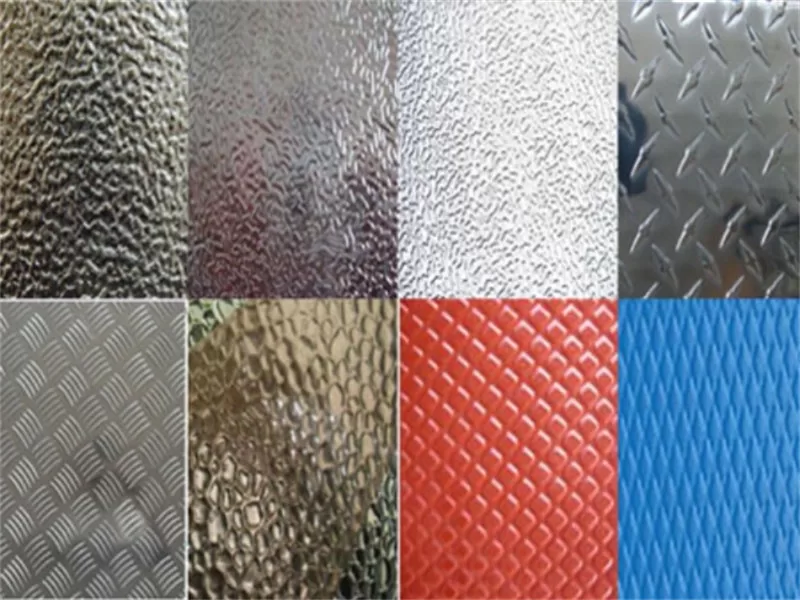
Have you ever walked into a building and admired a textured metal panel on the wall, or noticed a non-slip pattern on a metal floor plate? Chances are, you were looking at embossed metal.
What Exactly is Embossed Metal?
Embossed metalrefers to any metal sheet or coil that has undergone a process to create a three-dimensional pattern on its surface. Unlike etching or engraving, where material is removed, embossing reshapes the metal by pressing it between dies or rollers. The result is a durable, tactile, and often visually striking texture that can be both decorative and functional.
The base material for embossed metal can be a wide variety of metals, including:
Stainless Steel: Known for its corrosion resistance and strength.
Aluminum: Lightweight, corrosion-resistant, and easily formable.
Galvanized Steel: Steel coated with zinc for added corrosion protection.
Copper: Valued for its aesthetic appeal and conductivity.
Brass: An alloy of copper and zinc, often used for decorative purposes.
The choice of metal depends entirely on the specific requirements of the application, such as durability, appearance, weight, and environmental exposure.
How is Metal Embossing Done?
The creation of embossed metal involves precision manufacturing processes. Here’s a simplified overview:
Material Preparation: A flat sheet or coil of the chosen metal is fed into the embossing machinery.
Die or Roller Engagement:
Roll Embossing: The most common method, where the metal passes between two hardened steel rollers, each with a mirror image of the desired pattern. As the metal is pressed, the pattern is transferred onto its surface. This is ideal for continuous production.
Press Embossing (Stamping): For more intricate or specific designs, a hydraulic press with custom-made dies (male and female) is used. The metal is placed between the dies, and the press applies immense pressure to form the pattern.
Pattern Formation: The pressure causes the metal to flow and take on the shape of the dies or rollers, creating the raised (embossed) and recessed (debossed) areas.
Finishing: After embossing, the metal may undergo further processes like cutting, cleaning, or coating, depending on its final application.
Key Benefits of Using Embossed Metal
The textured surface of embossed metal offers a range of significant advantages over plain flat metal, contributing to its widespread use.
Enhanced Aesthetics: The patterns add visual interest and sophistication, making embossed metal a popular choice for architectural and decorative applications.
Increased Rigidity and Strength: The embossing process can increase the stiffness and strength-to-weight ratio of the metal sheet, making it more resistant to bending and warping without increasing its thickness. This is a crucial benefit for embossed metal.
Improved Grip and Slip Resistance: Raised patterns provide a tactile surface that significantly improves traction, making embossed metal ideal for flooring, stair treads, and ramps where safety is paramount.
Scratch and Dent Concealment: The textured surface is far more forgiving than a smooth one, effectively masking minor scratches, scuffs, and dents, maintaining a cleaner appearance for longer.
Reduced Friction: In some applications, specific embossing patterns can reduce the surface area in contact, thus reducing friction.
Better Heat and Light Diffusion: Textured surfaces can help diffuse light and heat, reducing glare and potentially aiding in thermal management.
Sound Dampening: Certain embossed metal patterns, especially when backed with other materials, can contribute to acoustic dampening.
Weight Reduction (perceived): By adding strength without adding significant thickness, embossed metal can sometimes allow for the use of lighter gauge material while maintaining desired structural integrity.
Common Applications of Embossed Metal
The versatility and functional benefits of embossed metal lead to its adoption across a vast array of industries.
Architecture and Construction:
Wall Panels and Cladding: Interior and exterior decorative panels.
Ceiling Tiles: Aesthetic and acoustic solutions.
Elevator Interiors: Durable and visually appealing finishes.
Door Skins: Enhanced strength and design.
Industrial and Safety:
Flooring and Walkways: Non-slip surfaces for factories, ramps, and platforms.
Stair Treads and Ladder Rungs: Improved grip for safety.
Toolboxes and Equipment Housings: Durability and scratch resistance.
Automotive and Transportation:
Vehicle Interiors: Decorative and functional trim.
Trailer Floors: Robust, non-slip surfaces.
Bus and Train Components: Durable surfaces.
Appliance and Furniture:
Refrigerator Doors: Textured finishes to resist fingerprints and dents.
Backsplashes and Countertops: Decorative and easy-to-clean surfaces.
Office Furniture: Durable and modern aesthetics.
Decorative and Artistic Uses:
Signage and Plaques: Unique and eye-catching designs.
Art Installations and Sculptures: Adding texture and depth.
Ductwork and Casing: Increased rigidity and often aesthetic.
Types and Specifications of Embossed Metal
Embossed metal comes in an incredible variety of forms, determined by the base metal, pattern, gauge (thickness), and finish. Understanding these specifications is key to selecting the right product for a specific application.
Here’s a look at common types and their typical characteristics:
Feature
Type A (Decorative/Light Duty)
Type B (Industrial/Medium Duty)
Type C (Architectural/Heavy Duty)
Base Metals
Aluminum, Copper, Brass
Galvanized Steel, Aluminum, Stainless Steel
Stainless Steel, Aluminum, Corten Steel
Common Alloys/Grades
1100 (Al), C110 (Cu), C260 (Brass)
A36 (Galv), 304 (SS), 5052 (Al)
316 (SS), 6061 (Al), A588 (Corten)
Gauge (Thickness)
0.010″ – 0.032″ (0.25 – 0.8 mm)
0.040″ – 0.125″ (1.0 – 3.2 mm)
0.060″ – 0.250″ (1.5 – 6.4 mm)
Typical Patterns
Linen, Stucco, Diamond Plate (small)
Checker Plate, Tread Plate, Pebble
Custom Geometric, Raised Dot, Large Diamond
Finish Options
Mill Finish, Polished, Brushed, Coated
Mill Finish, Galvanized, Powder Coated
Brushed, Polished, Mirror, Specialty Coatings
Sheet/Coil Widths
24″ – 48″ (610 – 1220 mm)
36″ – 60″ (914 – 1524 mm)
48″ – 72″ (1220 – 1830 mm)
Primary Applications
Appliance panels, interior trim, crafts
Walkways, truck beds, machinery covers
Building facades, high-traffic flooring, elevators
Note: The numerical values and examples provided are typical ranges and can vary significantly based on specific manufacturers, regional standards, and custom project requirements. Always consult with suppliers for precise specifications.
Choosing the Right Embossed Metal
When selecting embossed metal, consider these critical factors:
Application Environment: Is it indoors or outdoors? Will it be exposed to moisture, chemicals, or extreme temperatures?
Functional Needs: Does it need to be slip-resistant, highly durable, or merely decorative?
Aesthetic Requirements: What kind of visual impact or pattern is desired?
Budget: Different metals and finishes will have varying costs.
Weight Constraints: Is the overall weight of the structure a concern?
Fabrication: Will the metal need further cutting, bending, or welding after embossing?


 Byadmin