Address
304 North Cardinal St.
Dorchester Center, MA 02124
Work Hours
Monday to Friday: 7AM - 7PM
Weekend: 10AM - 5PM
Address
304 North Cardinal St.
Dorchester Center, MA 02124
Work Hours
Monday to Friday: 7AM - 7PM
Weekend: 10AM - 5PM


 Byadmin
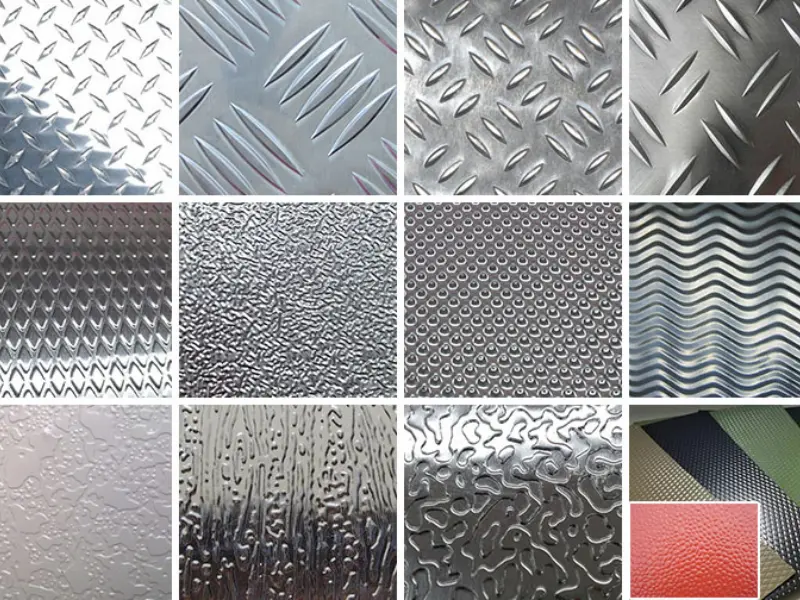
When you look at the back of a refrigerator or the floor of a heavy-duty truck, you often see metal with a pattern. This is an Embossed Aluminum Sheet. It is not just for looks. The texture makes the metal stronger, hides scratches, and prevents slipping.
Choosing the right thickness and size is the most important part of your project. If the sheet is too thin, it might dent. If it is too thick, it will be hard to bend and cost too much.
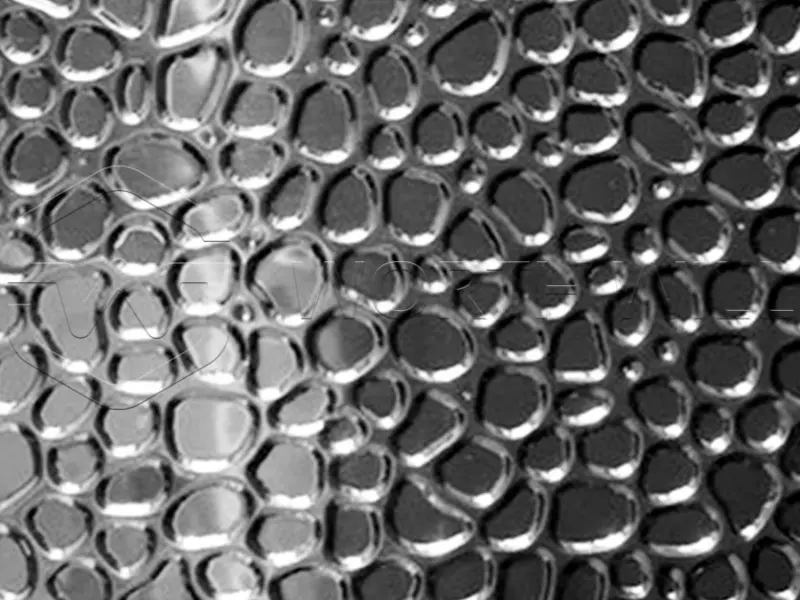
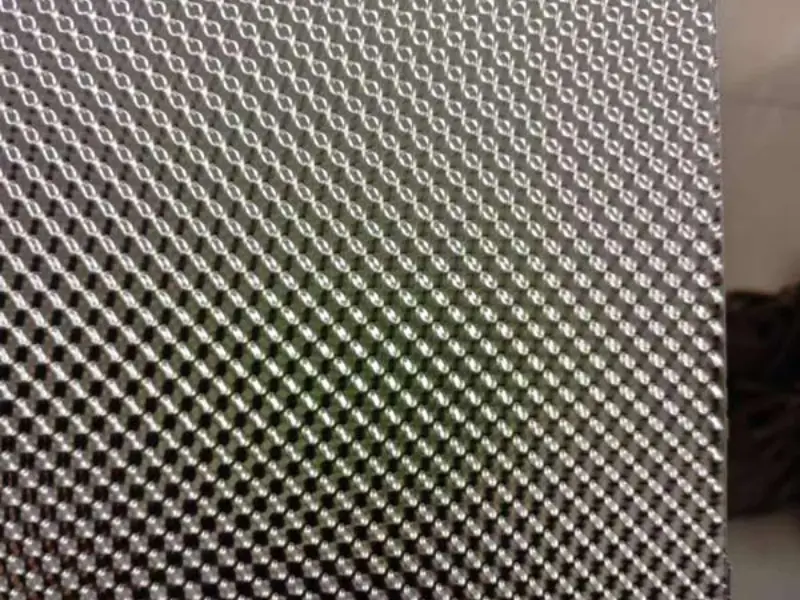
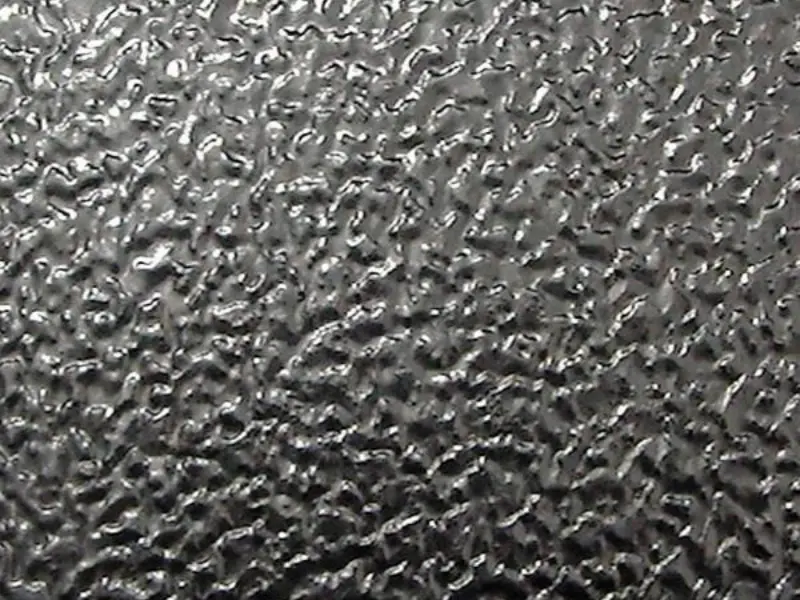
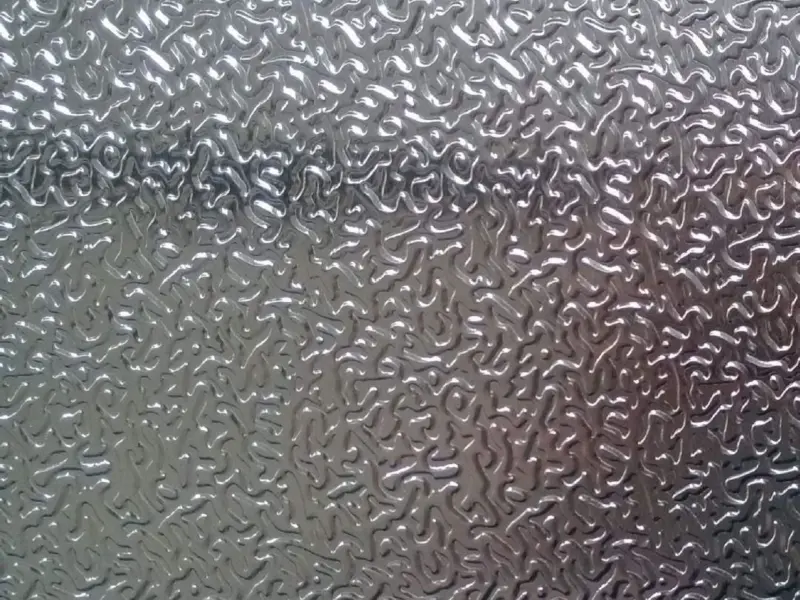
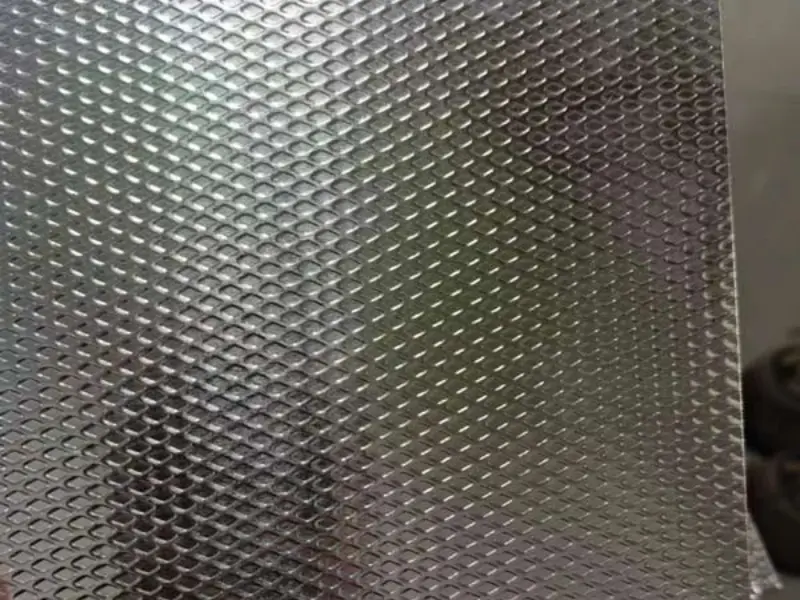
An embossed aluminum sheet starts as a flat mill-finish sheet. It then passes through high-pressure rollers with a specific pattern. This process is called “cold rolling.” The pattern is pressed onto one or both sides of the metal.
Because the surface is no longer smooth, light does not reflect off it like a mirror. This makes it perfect for bright outdoor areas or inside appliances where you don’t want a “glaring” effect. In the industry, people also call this “stucco aluminum” or “tread plate.”
Thickness is the most critical spec. It is usually measured in millimeters ($$mm$$) or gauges. Note that for embossed sheets, the thickness usually refers to the “base” thickness before the pattern is added.
| Thickness Range (mm) | Common Uses | Industry Name |
|---|---|---|
| $$0.2mm – 0.5mm$$ | Refrigerator liners, pipe insulation | Foil/Thin Sheet |
| $$0.5mm – 1.0mm$$ | HVAC ducting, roofing, wall panels | Standard Sheet |
| $$1.0mm – 2.0mm$$ | Decorative cladding, kitchen equipment | Mid-weight Sheet |
| $$2.0mm – 4.0mm$$ | Toolboxes, vehicle flooring, stairs | Heavy-duty Plate |
| $$4.0mm – 6.0mm$$ | Industrial platforms, marine decks | Thick Plate |
Most suppliers keep standard sizes in stock. If you need a special size, you can ask for “cut-to-length” service.
| Width (mm) | Length (mm) | Feet Equivalent |
|---|---|---|
| $$1000mm$$ | $$2000mm$$ | $$3.3ft \times 6.6ft$$ |
| $$1220mm$$ | $$2440mm$$ | $$4ft \times 8ft$$ |
| $$1250mm$$ | $$2500mm$$ | $$4.1ft \times 8.2ft$$ |
| $$1500mm$$ | $$3000mm$$ | $$5ft \times 10ft$$ |
The “Alloy” is the mix of metals. The “Temper” is the hardness. For embossed sheets, the series $$1xxx$$, $$3xxx$$, and $$5xxx$$ are the most common.
These are “pure” aluminum alloys. They are very soft and easy to bend.
These contain manganese. They are about $$20%$$ stronger than the $$1xxx$$ series.
These contain magnesium. They are very strong and do not rust in salt water.
| Alloy Series | Strength | Corrosion Resistance | Main Feature |
|---|---|---|---|
| 1000 Series | Low | High | Excellent conductivity |
| 3000 Series | Medium | High | Most popular for stucco |
| 5000 Series | High | Excellent | Marine-grade quality |
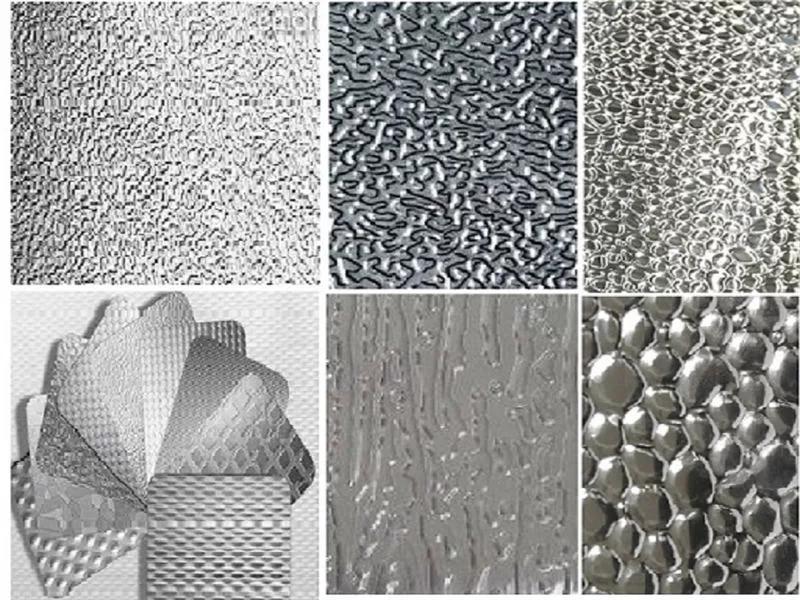
The pattern you choose changes how the sheet performs. Here are the most popular types.
This is the most common embossed aluminum sheet. It looks like the skin of an orange. It is used mostly in refrigerators and HVAC ducts, and hides scratches very well and diffuses light.
This pattern has raised “ribs” that look like diamonds. It is very thick and strong. Its main job is to provide grip so people do not slip. You will see this on the back of trucks and on stairs.
Similar to the diamond pattern, but with five parallel lines. This is very popular in Europe and Australia for industrial flooring. It is extremely tough.
These are purely decorative. They look like small stones or a surface hit by a hammer. They are used for high-end interior design and lamp reflectors.
Where should you use these sheets? Here is a simple list:
If you know the size and thickness, you can find the weight. Aluminum has a density of approximately $$2.71g/cm^3$$.
Formula: $$Weight (kg) = Thickness (mm) \times Width (m) \times Length (m) \times 2.71$$
Example: If you have a sheet that is $$1mm$$ thick, $$1.22m$$ wide, and $$2.44m$$ long: $$1 \times 1.22 \times 2.44 \times 2.71 = 8.06kg$$
Note: The pattern adds a tiny bit of weight, but using the base thickness is the industry standard for estimation.
When you are ready to buy, keep these three tips in mind:
The pattern must be clear and consistent. If the rollers are old, the pattern will look “blurry” in some spots. Ask for a photo or a small sample before buying a full container.
In the manufacturing process, oil is used. High-quality suppliers clean the sheets after embossing. Make sure your sheets are “degreased” so that glue or paint can stick to them later.
Ask for PE or PVC film on the top side. Even though embossed sheets hide scratches, the film protects the metal during cutting and shipping.
Usually, yes. There is an extra “processing fee” for the embossing step. However, because it is stronger, you can sometimes use a thinner sheet to do the same job, which saves money.
Yes. Many suppliers offer “Color Coated Embossed Aluminum.” You can choose any RAL color. This is very popular for modern building facades.
No. Aluminum creates a natural oxide layer that protects it. If you use the $$5052$$ alloy, it can even sit in salt water for years without corroding.
The Embossed Aluminum Sheet is a versatile material. Whether you need the Stucco pattern for a fridge or the Diamond pattern for a garage floor, knowing the thickness and alloy is key.
By picking the right size and specification, you ensure your project stays strong, looks great, and fits your budget.