Address
304 North Cardinal St.
Dorchester Center, MA 02124
Work Hours
Monday to Friday: 7AM - 7PM
Weekend: 10AM - 5PM
Address
304 North Cardinal St.
Dorchester Center, MA 02124
Work Hours
Monday to Friday: 7AM - 7PM
Weekend: 10AM - 5PM


 Byadmin
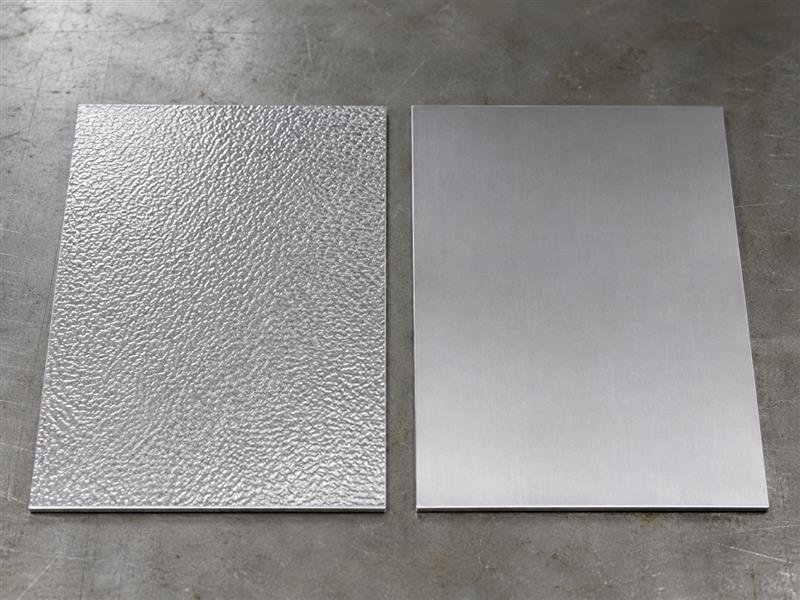
The choice between embossed aluminum and plain aluminum starts with the job the sheet must perform. Embossed aluminum has a raised or recessed surface pattern, while plain aluminum has an unembossed face that can be supplied in different finishes. Buyers compare them for appearance, forming, cleaning, bonding and cost. A meaningful comparison holds the alloy, temper, base metal thickness and coating requirements consistent, then checks how each surface behaves in the intended part.
On this page — Surface difference · Comparison table · Appearance · Fabrication · Cleaning and bonding · Cost review · Sample trial
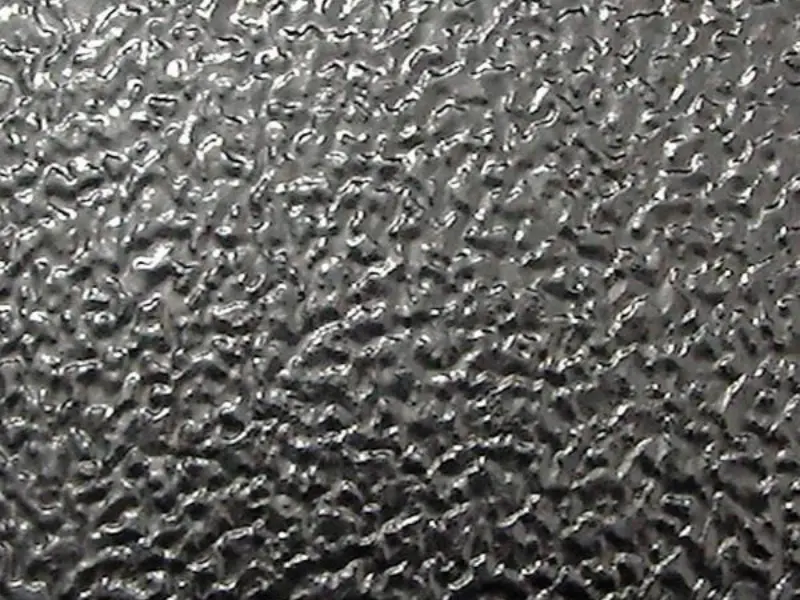
Embossing introduces relief into the sheet surface. A stucco pattern has an irregular appearance often described as orange peel. Other embossed products use different decorative or geometric patterns. Specify the exact pattern when requesting a quote because the word embossed covers a broad range of surfaces. A photograph can explain the initial intent, and a physical sample can establish the approved production reference.
Plain aluminum is also a broad purchasing description. It may mean a smooth mill-finish sheet in one inquiry and a coated or anodized sheet in another. Define the finish, visible side and cosmetic requirements for both options. Record whether gauge refers to the substrate thickness or a measurement across the relief. This prevents an attractive-looking sample from being compared against a differently specified material.
| Buying factor | Embossed aluminum | Plain aluminum |
|---|---|---|
| Surface appearance | Patterned relief produces small highlights and visual depth | Appearance depends on the specified smooth finish |
| Cosmetic review | Pattern consistency and marks across raised areas need checking | Directional marks and reflection may be more visible on some finishes |
| Forming review | Trial the selected pattern through critical bends | Trial the chosen smooth finish through the same geometry |
| Cleaning review | Include the relief, corners and joints in the trial | Include the actual finish, seams and contact conditions |
| Bonding review | Define the reverse-side condition and contact area | Define the reverse-side condition and surface preparation |
| Price comparison | Include embossing, finish and fabrication yield | Include the specified finish and fabrication yield |
Compare matched samples. Use the same alloy, temper, base gauge and relevant finish requirements when the purpose of the trial is to isolate the surface choice.
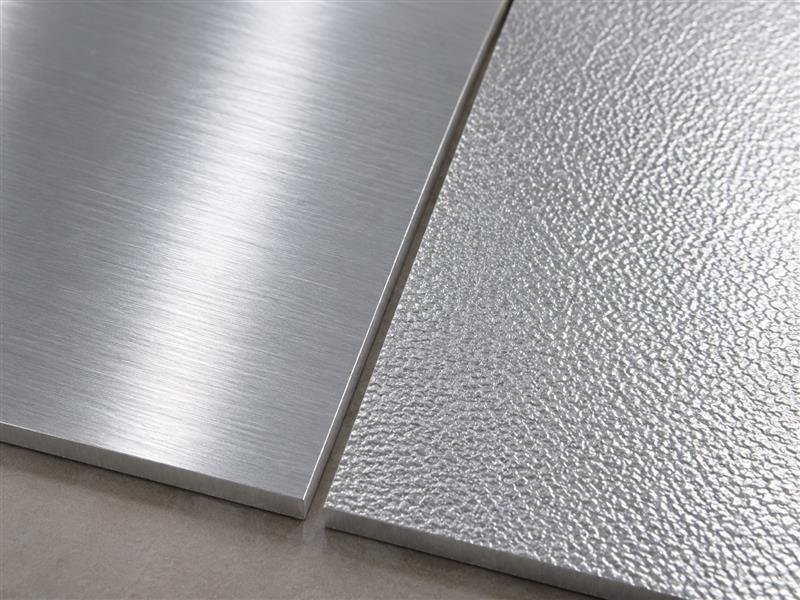
Embossed relief divides light into small highlights. Smooth sheet can show a more continuous reflection or a directional sheen, depending on the finish. These effects can look different under sunlight, overhead factory lighting and the enclosed lighting of an appliance. Put the samples side by side under the light the finished product will experience. View them from the normal operating distance as well as close up.
Texture can make some small scratches or handling marks less prominent. This may appeal to buyers of cabinet liners, architectural panels or jacketing. Establish acceptable damage using a written cosmetic standard and representative samples. A deep dent, coating defect or sharp edge needs its own assessment. Record which face is visible and whether the panel direction affects the appearance of adjacent pieces.
Material strength depends on the alloy, temper and product condition specified for the job. The surface description alone does not provide the information needed for a structural calculation. Where load capacity or panel deflection matters, give the designer the complete material specification, formed geometry and support arrangement. Request the applicable material records and evaluate any proposed substitution against the design requirements.
Likewise, a thin liner, a decorative wall panel and a walkway require different engineering decisions. For a panel spanning between supports, review the full geometry and fixing design. If a surface will be walked on, specify and verify the required slip performance under the expected service conditions. A decorative stucco pattern should be evaluated for the role actually assigned to the component.
The forming trial should use the intended alloy, temper, gauge and finish for each option. Cut the same blank and form the same bend radius so the results are comparable. Inspect the visible surface, edge quality, springback and fit of mating parts. Check whether the tooling or support pads mark the surface. Photograph the samples under a common light source and retain the trial settings.
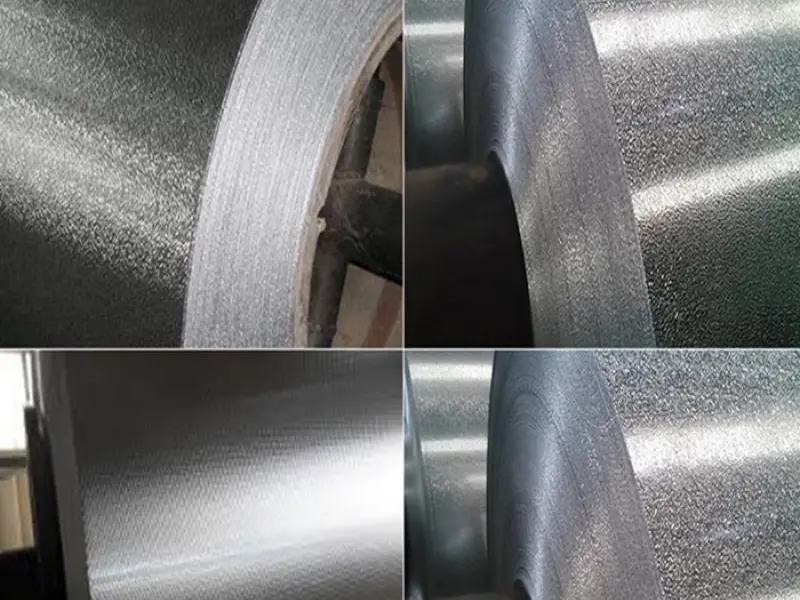
Embossing also needs to be considered where the sheet passes through a feed line or a fixture. Confirm which face contacts the guides and whether protective film remains in place during processing. If a pattern continues around a folded edge, include that detail in the sample. A small flat coupon can establish color and texture, while a representative formed part can reveal issues in the production route.
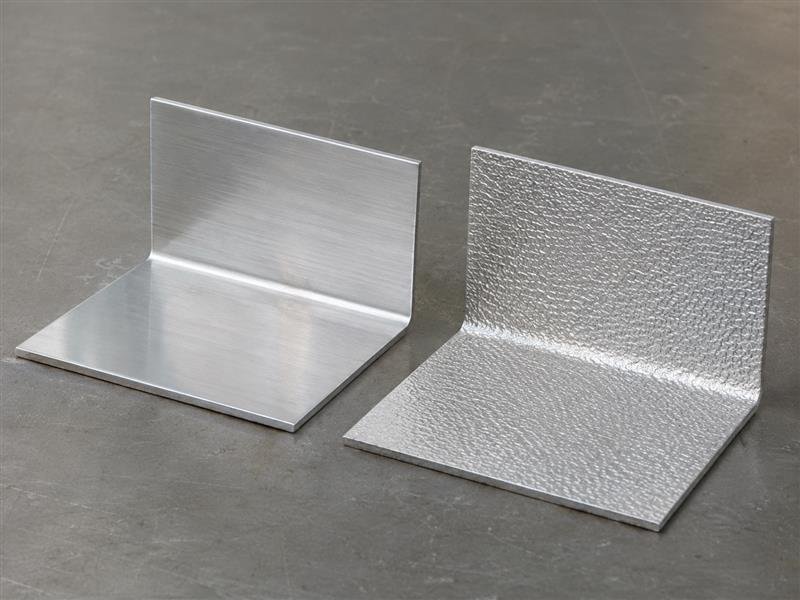
Cleaning performance depends on the actual surface, finish and substances encountered in service. Test the cleaning routine on both options using the proposed tools, concentration and contact time. Include formed corners, seams and other areas where liquid or residue can collect. Inspect the surface after repeated cleaning and drying. Use the results to prepare care instructions for the finished product.
For a bonded assembly, specify the reverse-side condition independently of the visible face. Ask the adhesive or assembly supplier to define preparation and process requirements, then trial the production materials together. Where a coating is applied, approve the coating and texture as a combined finish. Keep the acceptance sample linked to the approved material designation and processing sequence.
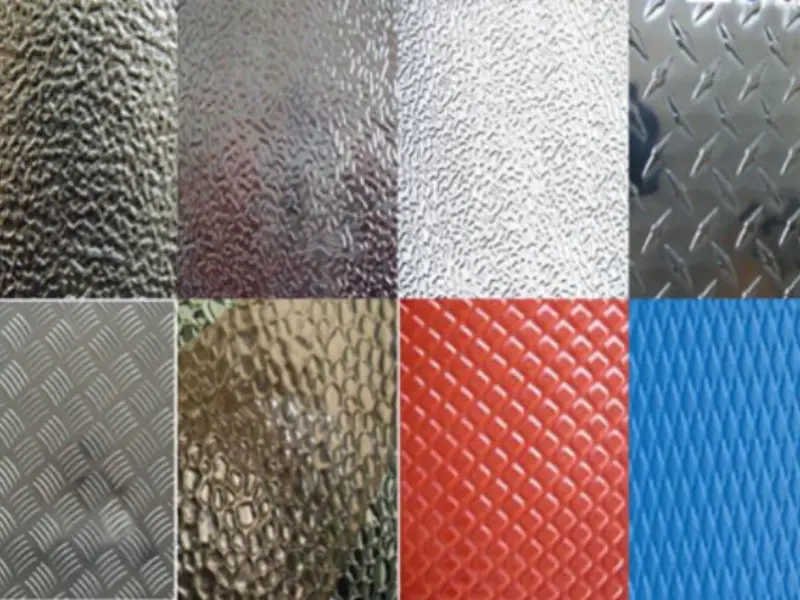
Ask for quotes against the same dimensions, quantity, delivery point and documentation requirements. Identify any price difference caused by embossing, coating, protective film or packing. Compare sheet or coil yield using the blank dimensions your process will actually cut. Include startup waste, trim and any scrap introduced by surface handling. This gives purchasing a clearer view than a price per kilogram considered on its own.
For repeat production, record the cost and handling steps that the trial reveals. One finish may require extra separation sheets or a different guide-pad material. A different available width may change trim loss. Include these effects in a simple cost-per-accepted-part calculation and review it with the operator. Where the finish is selected for appearance, keep the approved cosmetic requirements in the commercial comparison.
Prepare one comparison sheet that follows both samples through the trial. Record the supplier, alloy, temper, nominal gauge, finish and sample identification. List the same blank size, bend details and inspection points for each option. Add photographs taken with consistent light and camera position. Include the inspector’s observations in plain terms, such as a visible guide mark near an edge or a mismatch at a folded corner. This gives the design and purchasing teams a common record for the decision.
Then connect the trial to the order. If the chosen embossed sheet needs a particular pattern orientation or film, add those requirements to the purchase specification. If a smooth finish was approved under a defined viewing condition, retain that condition in the cosmetic standard. Record the accepted sample and the cost assumptions used in the review. For a repeat batch, the receiving team can check the material against the approved record before it reaches the line. If the application changes later, revisit the affected checks and update the specification. A documented comparison makes the reason for the surface choice visible to the next buyer or production engineer.
Prepare — Two fully identified material samples with the intended alloy, temper, base gauge and finish.
Fabricate — Cut and form the same component geometry using recorded settings.
Inspect — Compare appearance, dimensions, cleaning, bonding and handling under the intended conditions.
Decide — Document the chosen surface, acceptance sample, yield and total part cost before issuing the purchase order.
Worthwill supplies embossed aluminum coil and stucco embossed sheet for discussion against your application. Send the component drawing and comparison requirements through the contact page. For purchasing details, use the coil RFQ guide to organize the specification before requesting quotations.